Free delivery
Free delivery
Official distributor LEDSTAR · SKYLIGHT · ZOO MED · Horticultural LED lighting manufacturer since 2009
Spectrum and power advice on +33 3 83 47 83 98 · Monday to Friday
 Terrarium lighting · Nancy

Plant nutrient deficiencies: recognise signs and check the cause
Pale leaves, slower growth or damaged edges are not enough to diagnose a deficiency. Check growing conditions before changing fertiliser.
This guide is exclusively about plants
Fertiliser feeds a plant, not a person. Tropica Specialised Nutrition is a fertiliser for aquarium plants; it is never a human dietary supplement. Keep products in their packaging and follow their labels.
Observe before adding a product
- Note which leaves are affected: old or new, one leaf or the whole plant.
- Check substrate moisture and drainage; inspect the roots if the pot stays saturated.
- Inspect the undersides of leaves and the petioles for possible pests.
- Review previous feeding: repotting date, fertiliser already in the mix, dilution and frequency.
- Check available light and the plant’s development rather than inferring a deficiency from colour alone.
Signs that may fit, but are not specific
| Observation | Useful checks |
|---|---|
| Yellowing leaves | Ageing, watering, roots, light and then nutrition. |
| Brown or dry edges | Dryness, accumulated salts, exposure and local damage. |
| Weak new growth | Season, light, root volume, pests and fertilising history. |
A photo alone cannot reliably identify a missing nutrient. If symptoms persist, ask a horticultural professional to confirm the cause; substrate or water analysis may be needed.
Address one cause at a time
First restore suitable watering and functional roots. Then choose a product explicitly intended for your plants and follow the manufacturer’s dosage. Do not combine several fertilisers to speed up recovery. Observe new growth; a leaf that is already damaged is not a reliable indicator of recovery.
For a potted plant, see fertilisers for indoor plants and the guide to choosing fertiliser for foliage plants. For an aquarium, use only a product suitable for that environment and follow its instructions.
Sources and instructions
Editorial review: 3 October 2026 · TerraLED. Set up your equipment according to its instructions and the needs of the species.
Related posts
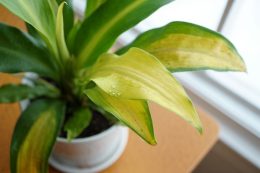 Yellow leaves: check the causes before treating
A yellow leaf may be part of normal ageing or point to several growing problems. Start with observation and the...
Lire la suite
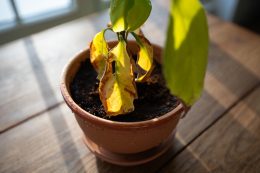 Brown leaves and dry edges: what to check
Brown leaves do not always have the same cause as yellow leaves. Identify dry edges, soft areas, localised spots and...
Lire la suite
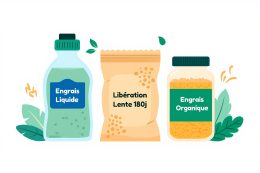 Fertiliser for tropical plants: choosing and dosing
Choose a fertiliser intended for your plants and follow its label. Pale leaves or slow growth do not automatically...
Lire la suite
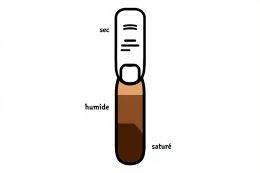 Watering tropical plants: observe before watering
When to water depends on the species, substrate, pot and light. No fixed schedule works for all tropical plants.
Lire la suite
Leave a comment
Log in to post comments